

If you have ever walked past a house with a flower bed so pretty it looked like a magazine photo, you know the feeling. You stop, you stare a little too long, and then you wonder how the owner got it to look that good. The truth is, most stunning flower beds are not built by professional landscapers with huge budgets. They are built by regular homeowners who picked the right layout, the right plants, and paid attention to a few small design details.
This guide walks you through 21 flower bed ideas you can actually copy in your own backyard. No fancy tools required, no complicated garden theory. Just simple, proven ideas that turn a plain patch of grass or dirt into something people notice.
Why Your Flower Bed Might Look Flat Right Now
Before jumping into the ideas, it helps to understand why some flower beds look amateur while others look polished. Usually it comes down to one of these problems: too many random colors thrown together, no clear border or shape, plants of the same height everywhere, or a bed that was never really planned, it just grew over time.
Once you fix these basic issues, everything else becomes easier. Keep this in mind as you read through the list below.
1. Layer Your Plants By Height
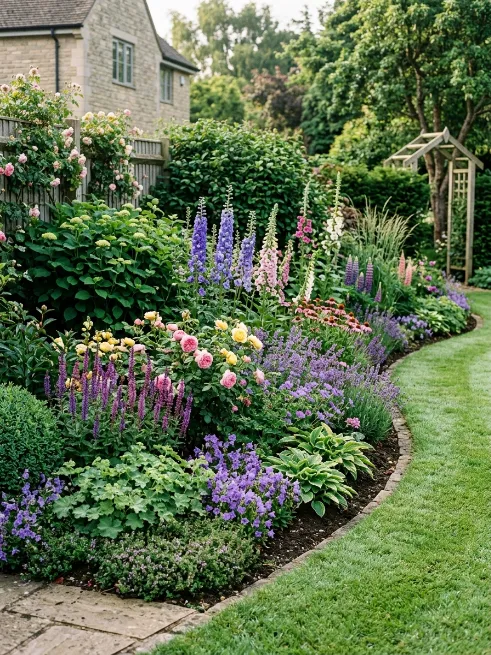
One of the easiest tricks used by garden designers is layering. Place your tallest flowers at the back of the bed, medium height plants in the middle, and short ground cover flowers at the front. This creates depth and makes even a small bed look full and intentional instead of scattered.
2. Stick To A Simple Color Palette
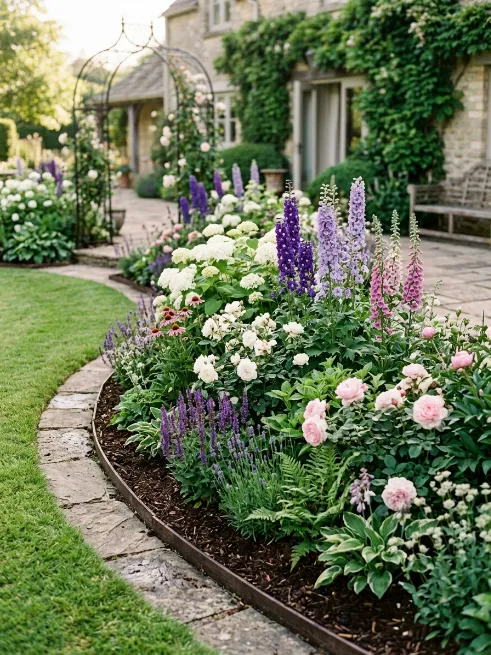
Picking three or four colors that work well together will always look better than a rainbow of random blooms. Try white, purple, and soft pink together, or go bold with orange, yellow, and deep red. A limited palette feels calm and put together.
3. Add A Curved Border Instead Of A Straight One
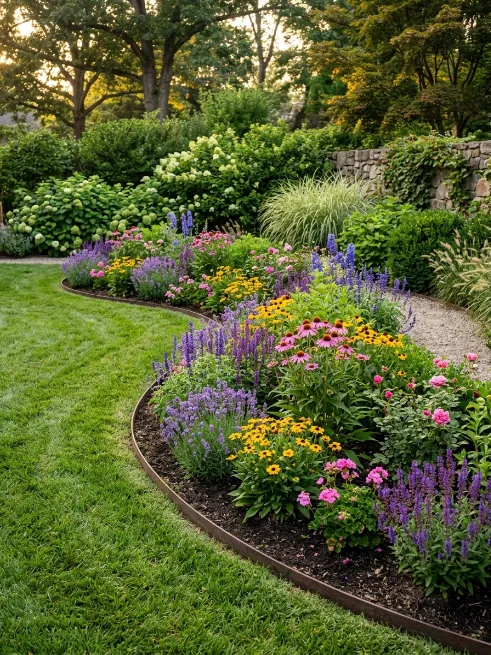
Straight edged flower beds can look stiff and boxy. A gentle curve along the edge softens the whole yard and gives it a more natural, relaxed feeling. You can mark the curve with a garden hose before digging so you get the shape just right.
4. Use Edging Materials To Frame The Bed
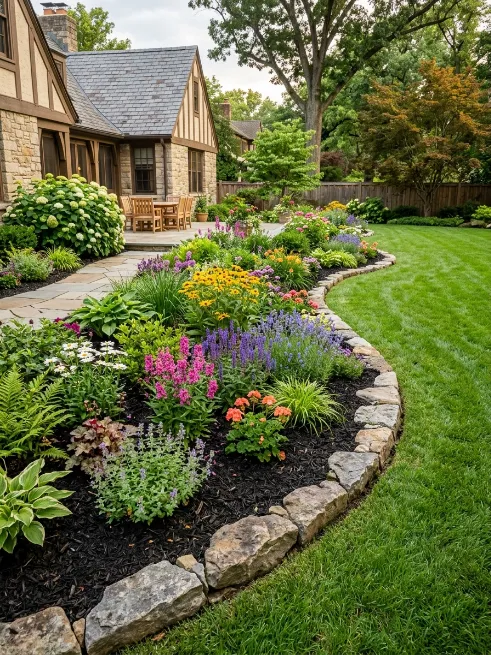
Bricks, stones, or metal edging strips give a flower bed a clean, finished outline. Without an edge, mulch and soil tend to spill onto the lawn and the whole area starts looking messy within weeks.
5. Group Plants In Odd Numbers
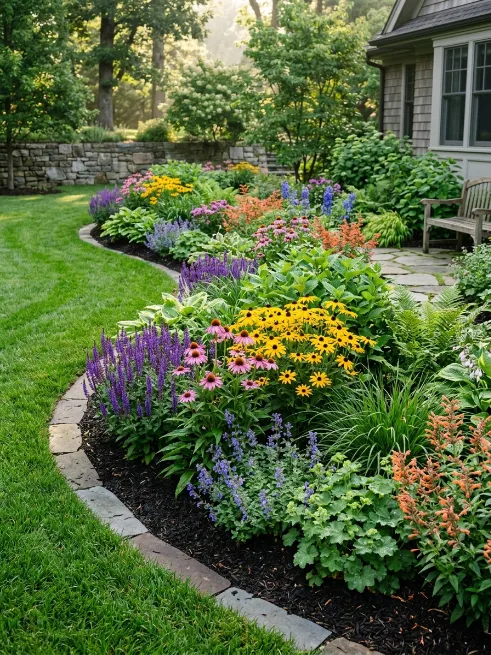
Gardeners have used this trick for decades. Planting flowers in groups of three or five instead of pairs looks more natural and pleasing to the eye. Even numbers tend to look forced.
6. Create A Focal Point
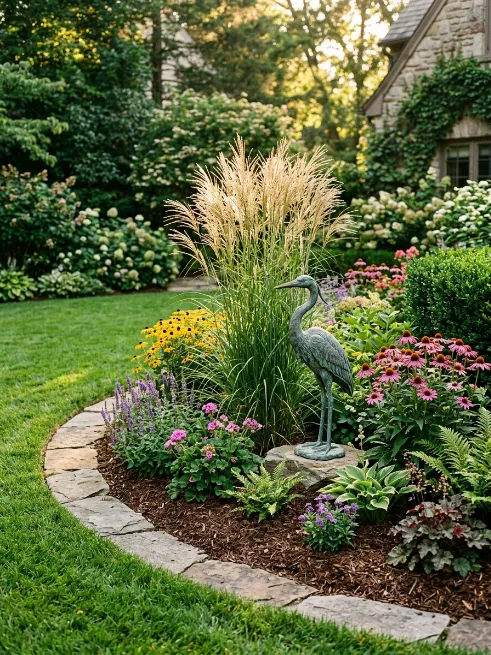
Every great flower bed has one spot that grabs attention first, maybe a tall ornamental grass, a small statue, or a burst of bright red flowers. Build the rest of the bed around that one feature so the eye has somewhere to land.
7. Mix Textures, Not Just Colors
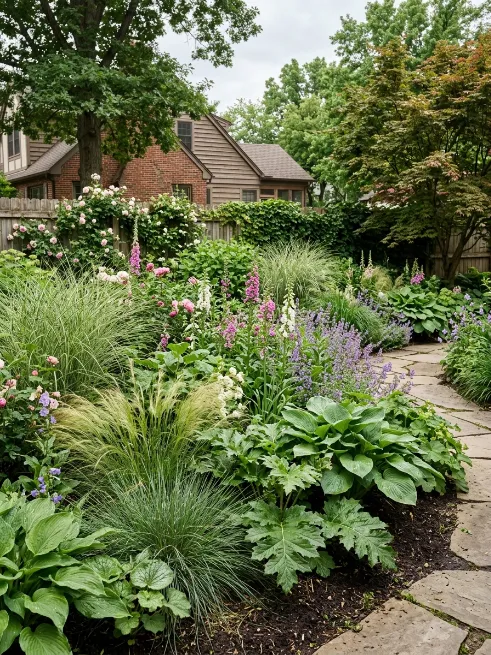
Soft, feathery leaves next to broad, glossy ones create visual interest even before the flowers bloom. Combining different leaf shapes and textures is a trick used constantly in professional landscaping.
8. Repeat The Same Plant In Several Spots
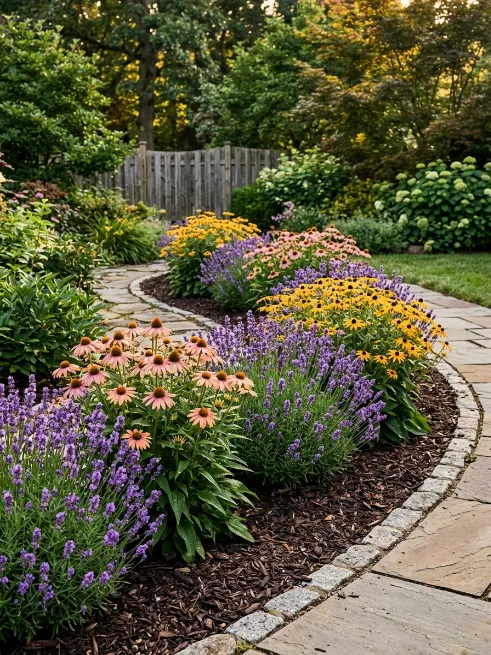
Instead of using ten different flower types once each, pick three or four favorites and repeat them throughout the bed. Repetition creates rhythm and makes the space feel designed rather than random.
9. Choose Flowers That Bloom At Different Times
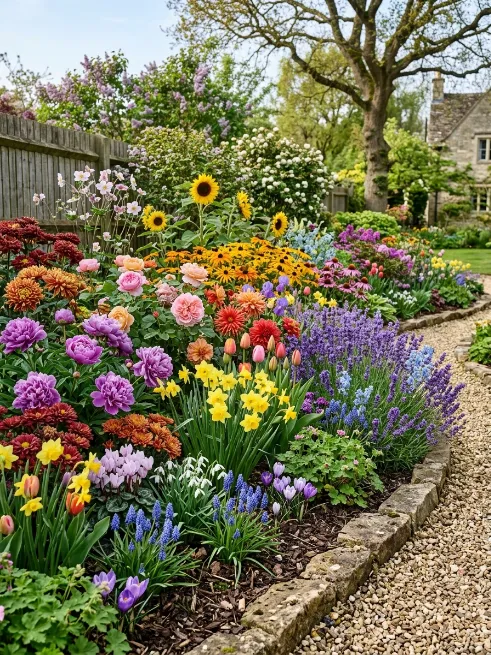
A bed that blooms all at once in spring and then sits empty for the rest of the year gets boring fast. Mix early bloomers, summer flowers, and fall blooming plants so there is always something happening.
10. Add Evergreen Shrubs For Structure
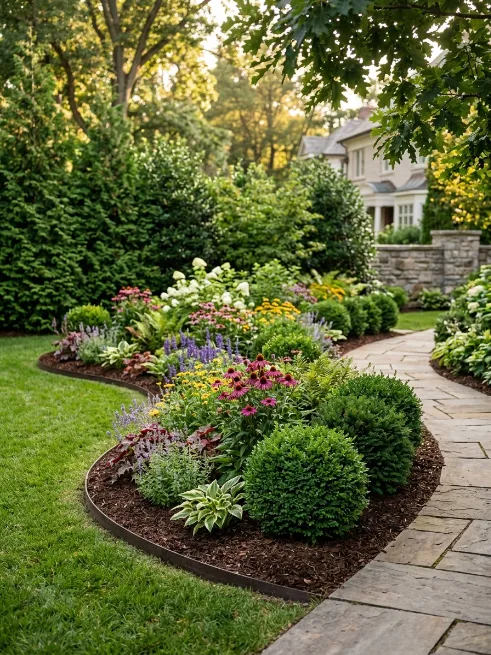
Flowers come and go with the seasons, but small evergreen shrubs stay green all year. Tucking a few into your bed gives it a backbone, so even in winter the space still looks planned and cared for.
11. Use Mulch To Tie Everything Together
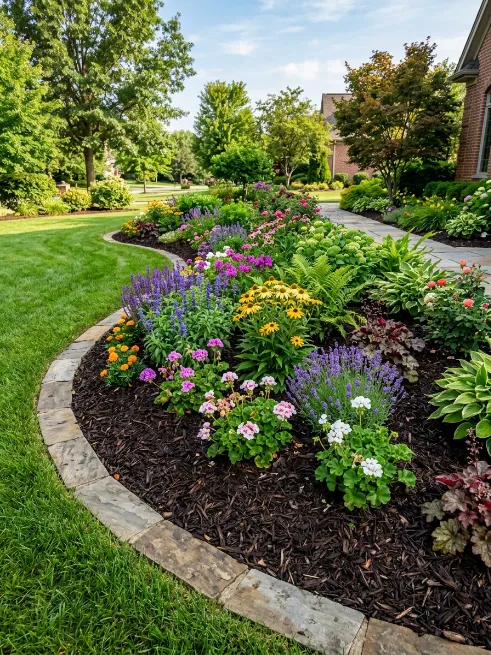
A fresh layer of mulch instantly makes any flower bed look neater. It also holds moisture, keeps weeds down, and gives a uniform background color that makes the flowers pop.
12. Build A Raised Flower Bed
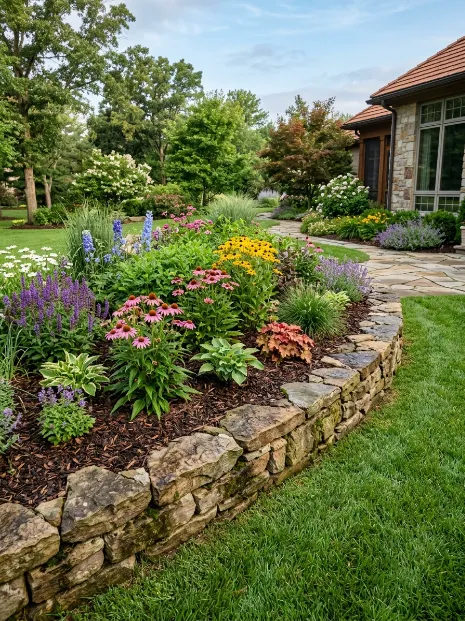
Raising the bed even six to twelve inches off the ground adds dimension to a flat yard. It also improves drainage and makes the flowers easier to see and maintain.
13. Try A Cottage Garden Style
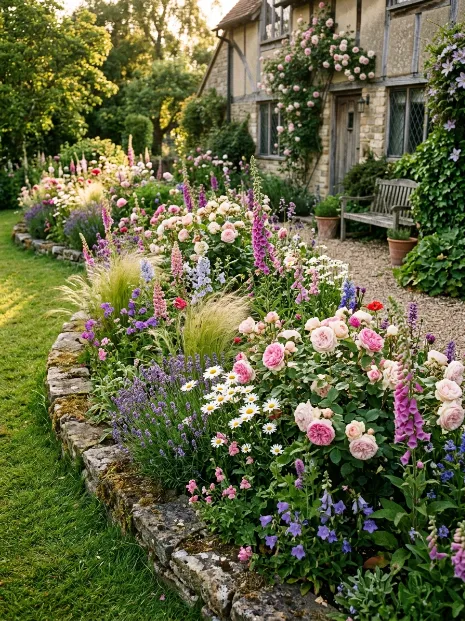
Cottage style beds are full, slightly wild looking, and packed with a mix of flowers planted close together. This look works great if you want something charming and a little less structured.
14. Go Minimal With A Single Flower Type
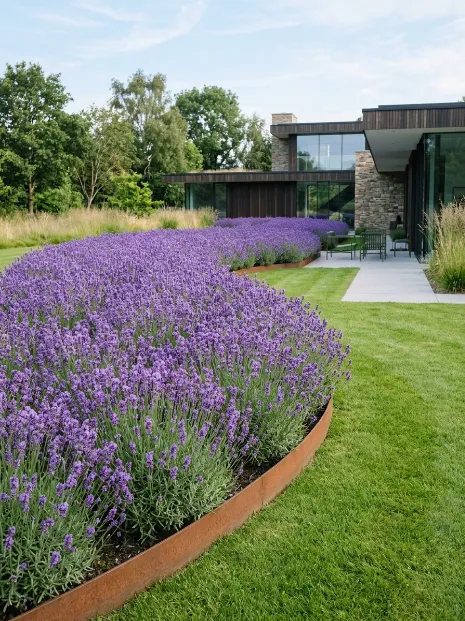
On the opposite end, planting one type of flower in a big sweeping mass, like a full bed of lavender or black eyed susans, creates a bold, clean, modern look that is surprisingly easy to maintain.
15. Add A Pathway Through Or Beside The Bed
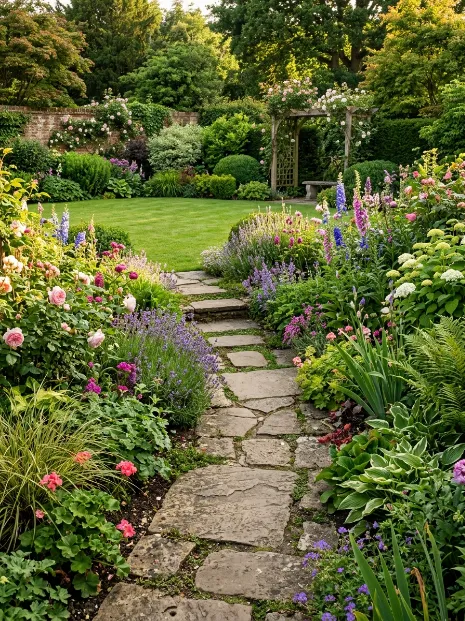
A small stone or gravel path running along or through your flower bed invites people to get closer and adds a practical touch that separates casual yards from designed ones.
16. Use Vertical Elements Like Trellises
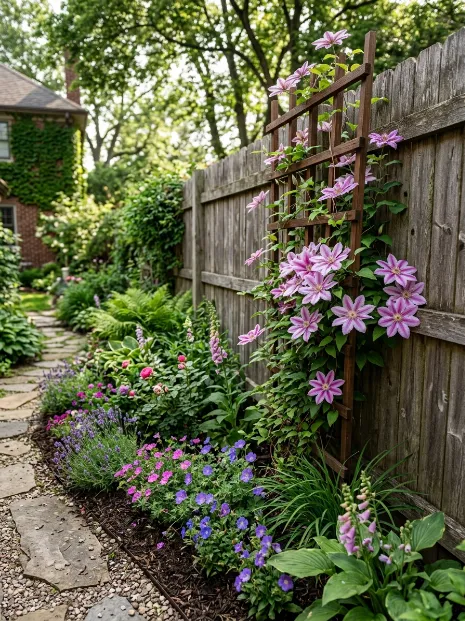
A trellis with climbing flowers such as clematis or morning glory adds height without taking up ground space. It is perfect for narrow beds along fences or walls.
17. Match The Bed Shape To Your Yard
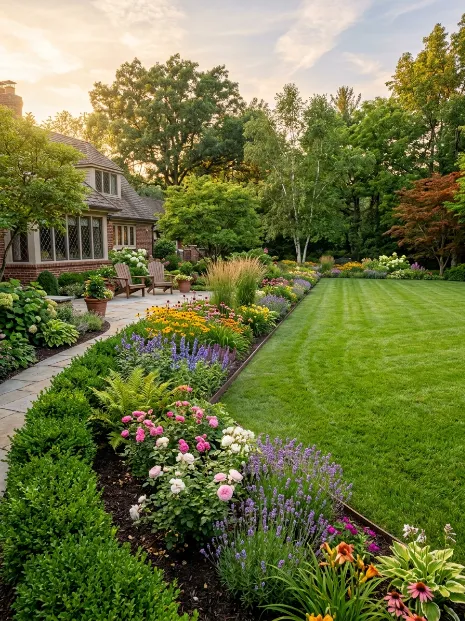
A long rectangular yard often looks better with a flowing curved bed, while a smaller square yard might suit a more geometric shape. Pay attention to your yard’s natural lines instead of forcing a shape that fights against it.
18. Include Native Plants
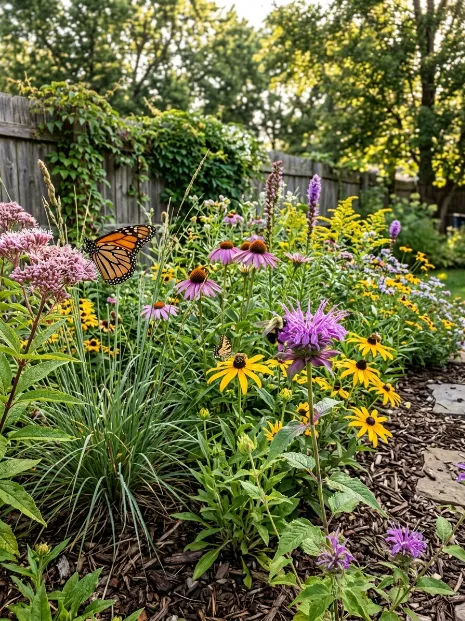
Native flowers are already suited to your local climate, so they tend to grow stronger with less watering and less fuss. They also attract local bees and butterflies, adding natural movement to the bed.
19. Light It Up At Night
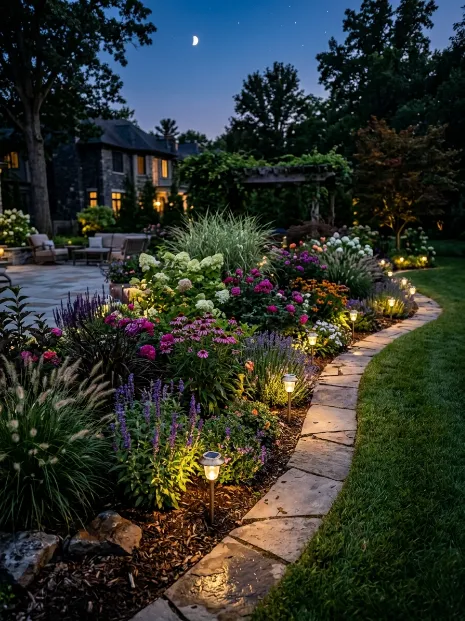
Small solar lights placed along the border turn your flower bed into a feature that looks good even after sunset. This is a detail most amateur gardens skip completely.
20. Keep Some Open Space
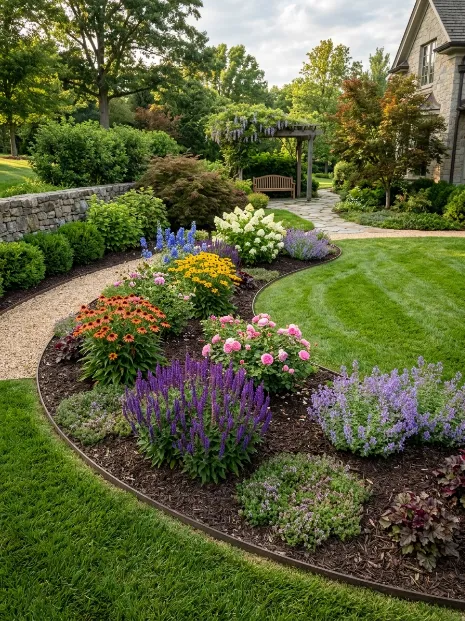
It might sound strange, but not every inch needs to be packed with flowers. Leaving small gaps of mulch or low ground cover gives the eye a place to rest and keeps the bed from feeling cluttered.
21. Refresh The Bed Seasonally
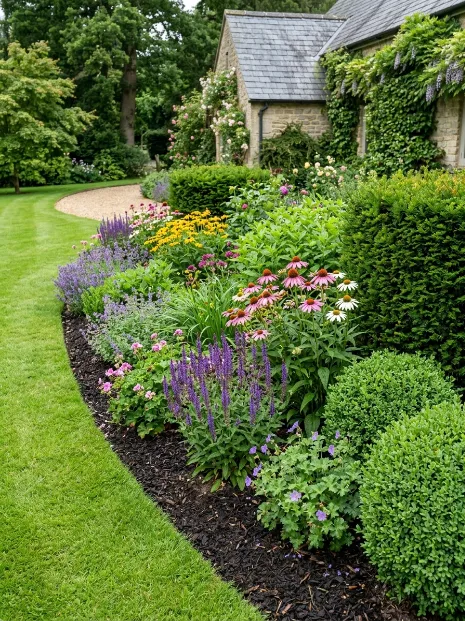
Professionally kept gardens are rarely left untouched for years. Swapping a few plants each season, trimming back what has gotten leggy, and adding fresh mulch keeps the bed looking sharp all year round.
Final Thoughts
Turning a plain backyard corner into a flower bed people stop to admire does not require a landscaping degree. It comes down to planning your layout, picking a color story you love, and paying attention to small finishing touches like edging and mulch. Pick two or three ideas from this list to start with, see how they look, and build from there. Your backyard does not need a total overhaul to look professionally designed, sometimes a few smart changes are all it takes.