

There’s something about a rock garden that just works. It doesn’t die in summer heat, it doesn’t need mowing, and it looks good in every single season without you lifting a finger. If you’re tired of fighting with grass that never grows right or flower beds that need constant babysitting, rocks might be the answer you’ve been looking for.
The best part is you don’t need a huge budget or a landscaping degree to pull this off. Some of the ideas below cost almost nothing and take a weekend to finish. Others are bigger projects worth saving up for. Either way, there’s something here for every yard, every climate, and every skill level.
Let’s get into it.
Why Rock Landscaping Makes Sense For Most Yards
Before jumping into the list, it helps to understand why so many homeowners are switching to rock based designs. Water bills keep climbing, and a yard full of thirsty grass just isn’t practical for a lot of people anymore. Rocks solve that problem completely since they need zero irrigation once they’re placed.
They also last decades. A wood mulch bed breaks down and needs replacing every couple years, but river rock or gravel stays put and looks fresh for a very long time. Add in the fact that rocks keep weeds down, prevent soil erosion on slopes, and give your yard a clean finished look, and it’s easy to see why this trend isn’t going anywhere.
1. A Dry Creek Bed That Doubles As Drainage
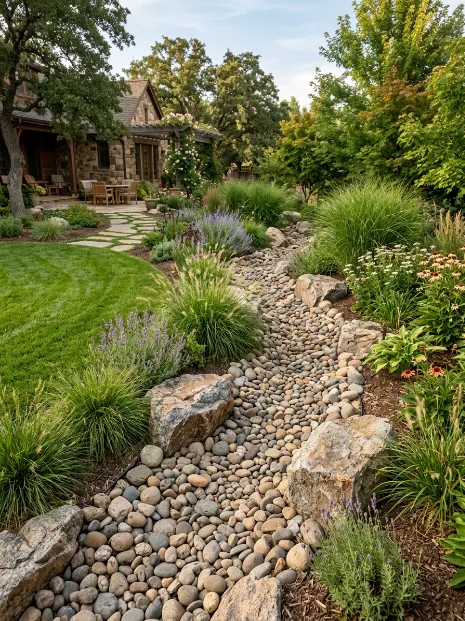
If your yard has a spot that turns into a swamp every time it rains, a dry creek bed fixes the problem and looks beautiful doing it. You dig a shallow winding trench, line it with landscape fabric, and fill it with rounded river rocks in different sizes. Add a few larger boulders along the edges to break up the flow and it looks like a real streambed, minus the water.
2. Boulder Clusters As A Natural Focal Point
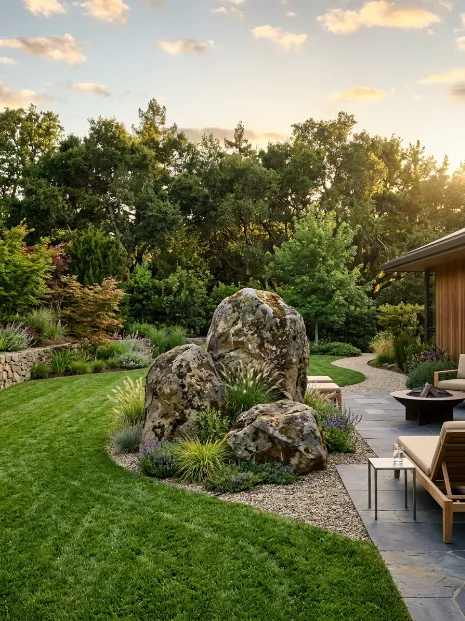
Three or five large boulders grouped together (always use odd numbers, it just looks more natural) can anchor an entire yard. Place them near your patio, by the front door, or as a standalone feature on a lawn. No plants needed, though a few ornamental grasses tucked around the base add nice texture.
3. Gravel Pathways Instead Of Concrete
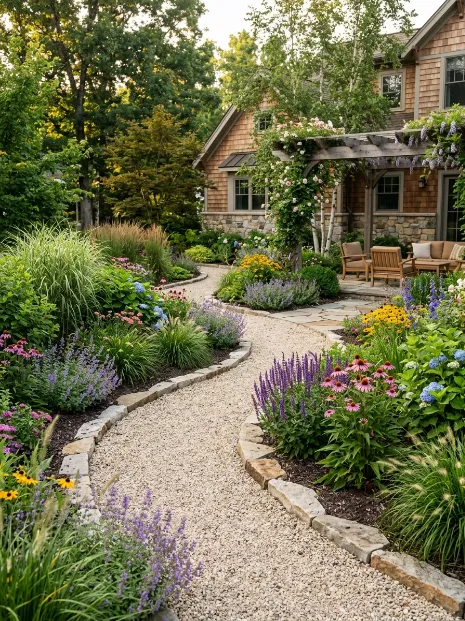
Poured concrete paths crack, stain, and cost a fortune to install. Pea gravel or crushed granite paths cost a fraction of that price and give your yard a softer, more relaxed feel. Line the edges with steel or stone borders to keep the gravel from spreading into your beds.
4. A Full Rock Garden With Alpine Plants
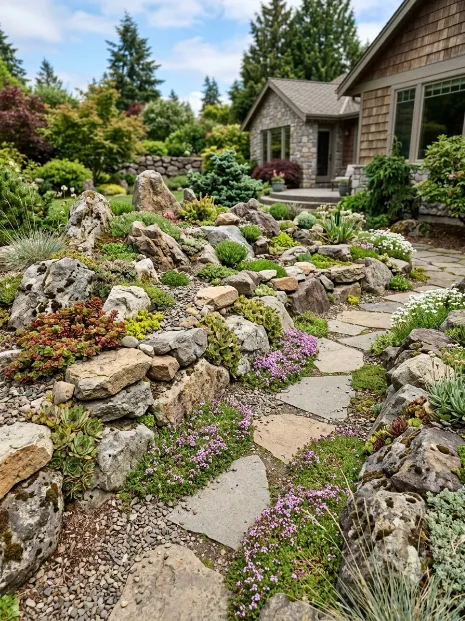
This is the classic look most people picture when they hear “rock landscaping.” Layer stones of different sizes into small mounds, then tuck low growing plants like sedum, hens and chicks, or creeping thyme into the gaps. It mimics a mountainside and stays interesting all year, even in winter when most gardens go dormant.
5. Riverbed Style Front Yard
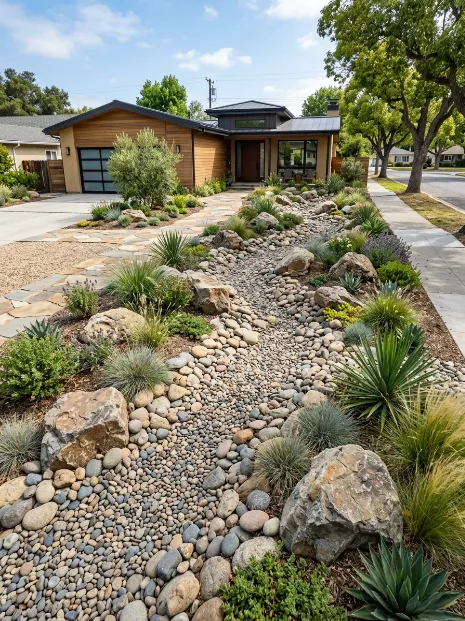
Ditch the grass entirely and turn your whole front yard into a dry riverbed look. Use a mix of rock sizes, from pea gravel up to medium boulders, arranged like water carved the path over centuries. It’s dramatic, it’s low upkeep, and it instantly makes your house stand out on the block.
6. Rock Mulch Around Trees
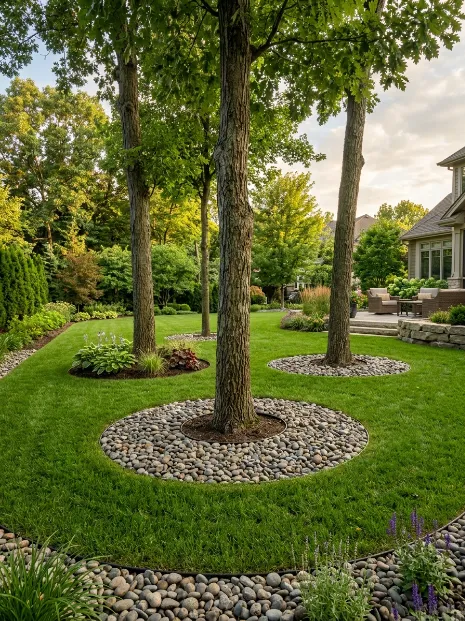
Skip the wood chips around your trees and use small rocks instead. It keeps moisture in the soil, stops grass and weeds from creeping up to the trunk, and never needs topping off the way mulch does. Just leave a small gap between the rocks and the trunk itself so moisture doesn’t sit against the bark.
7. A Zen Garden Corner
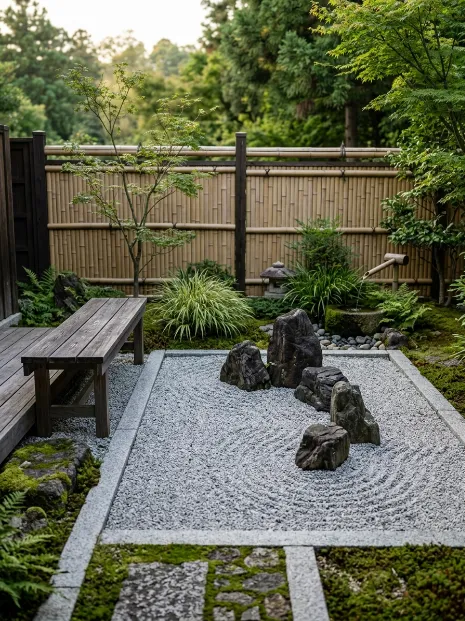
A small raked gravel area with a few carefully placed stones creates an instant calm spot in any backyard. Add a wooden bench nearby and you’ve got a quiet reading corner that took a single afternoon to build. This works especially well in small yards where a full garden bed isn’t practical.
8. Rock Retaining Walls On Sloped Yards
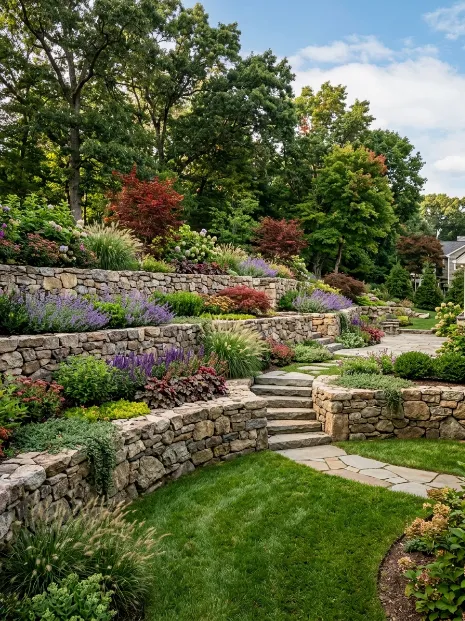
If your backyard has a slope, stacked stone retaining walls turn wasted hillside into usable, level space. They stop soil erosion, create natural planting terraces, and give the whole yard more structure. Dry stacked stone (no mortar) is a project a determined homeowner can tackle themselves over a weekend or two.
9. Rock Edging For Flower Beds
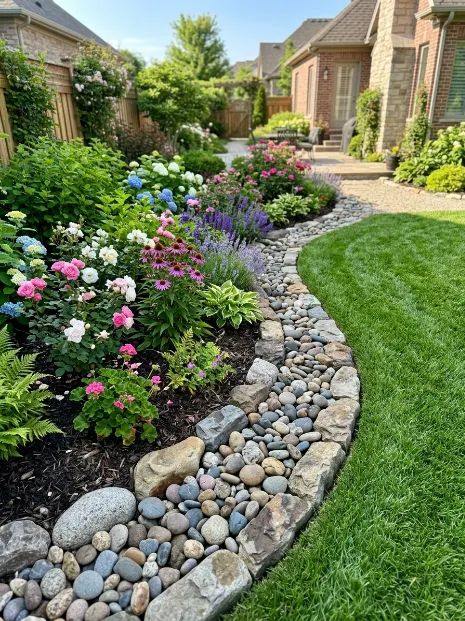
This one is simple but it makes a huge difference. Line your flower beds with fieldstone, cobblestone, or even large smooth river rocks instead of plastic edging. It looks sturdier, holds up for years, and gives your beds crisp defined borders.
10. A Fire Pit Surrounded By Flagstone
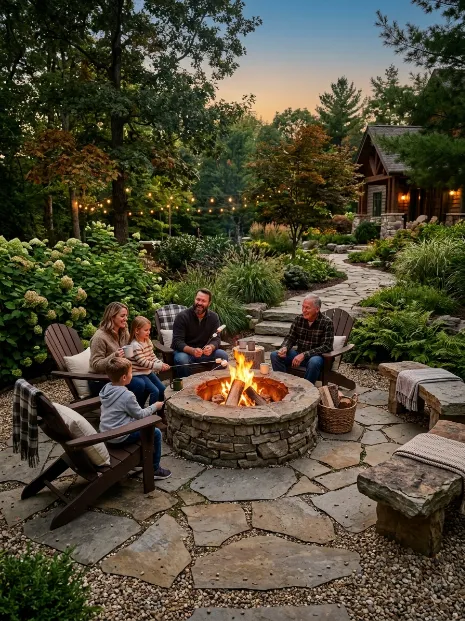
Flagstone and gravel around a fire pit gives you a safe, non flammable surface for gathering with family and friends. Add a ring of chairs or a couple of built in stone benches and you’ve created an outdoor living room that works nine months out of the year.
11. Mixed Gravel And Mulch Beds
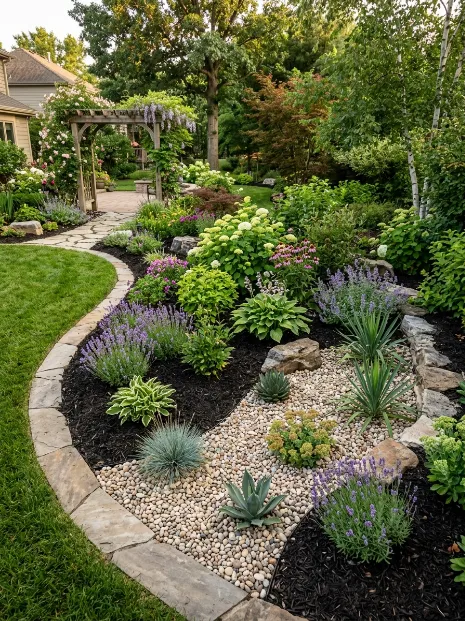
You don’t have to pick one or the other. Combining dark mulch with lighter colored gravel in the same bed creates contrast and depth. Use gravel around the base of shrubs where drainage matters most, and mulch closer to flowers that like a bit more moisture retention.
12. Rock Steps Built Into A Slope
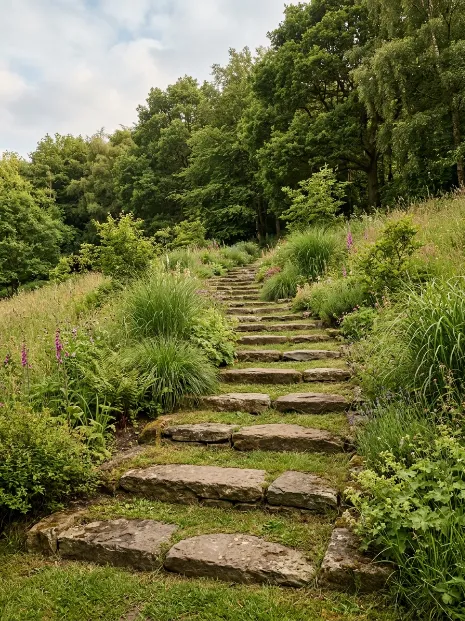
Instead of wooden or concrete stairs, carve natural looking steps directly into a hillside using large flat stones. They age beautifully, blend right into the landscape, and cost less than most hardscaping alternatives.
13. A Succulent Rock Garden
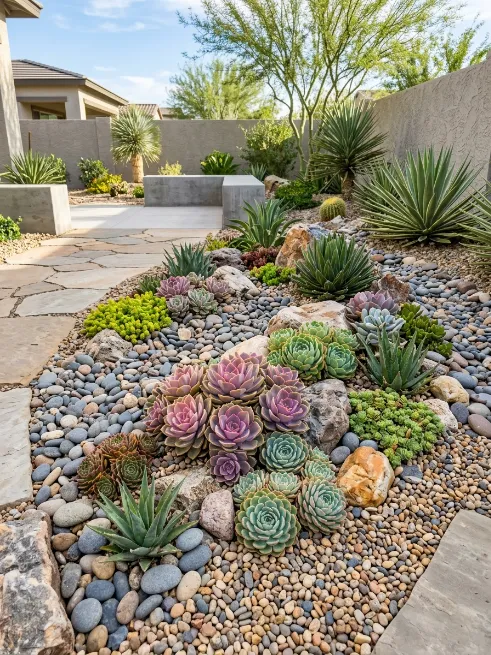
Succulents and rocks are basically made for each other since both thrive on neglect. Arrange different colored gravel with clusters of succulents like echeveria or sedum for a low water display that still looks colorful and alive.
14. Large Slab Stepping Stones Across Gravel
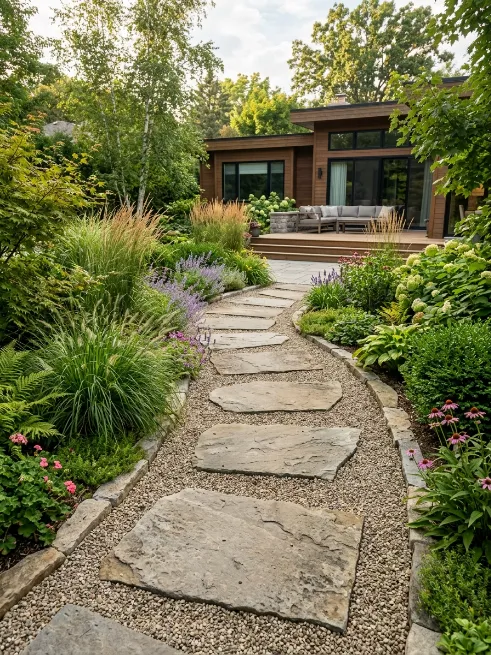
Instead of a solid path, place wide flat stepping stones directly into a bed of gravel. It creates movement, guides visitors naturally through the yard, and looks far more interesting than a straight concrete walkway.
15. A Rock Border Along The Fence Line
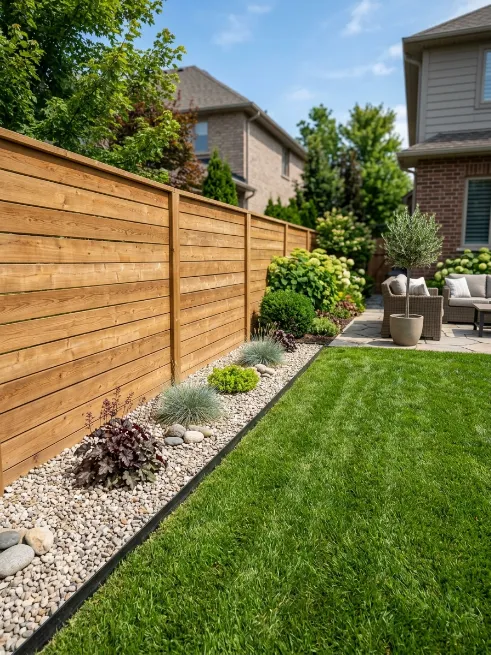
Grass right up against a fence is a pain to mow and trim. Run a strip of gravel or crushed stone along the base of your fence instead. It stops the string trimmer damage on fence posts and gives the whole perimeter a finished, tidy edge.
16. Colored Lava Rock For A Bold Look
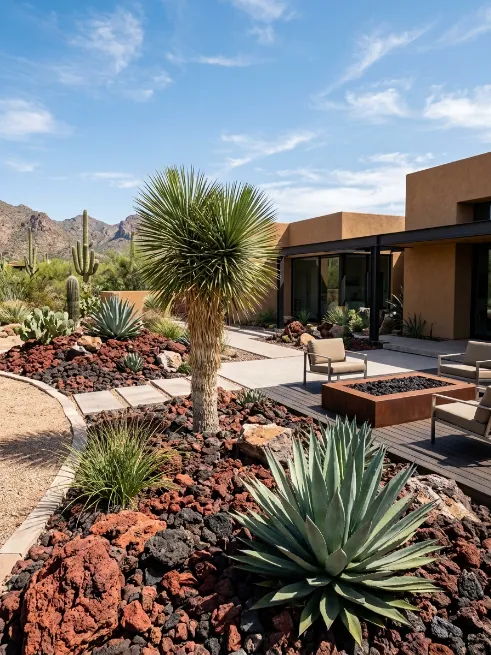
Red or black lava rock adds a punch of color that regular gray gravel can’t match. It’s lightweight, holds up in heat, and pairs beautifully with desert style plants like agave or yucca for a southwestern feel.
17. A Meditation Path With Stepping Stones
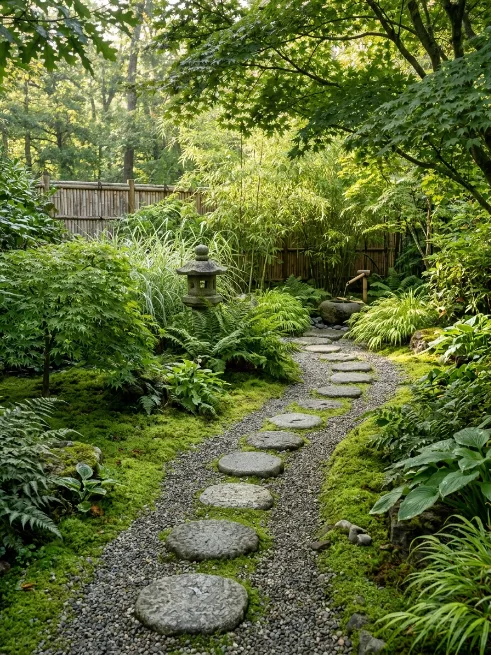
Round flat stones spaced out through a gravel or moss bed create a walking meditation path. It sounds small, but a quiet path like this tucked into a corner of the yard becomes a spot people actually use every day.
18. Rock Mounds As Mini Hills
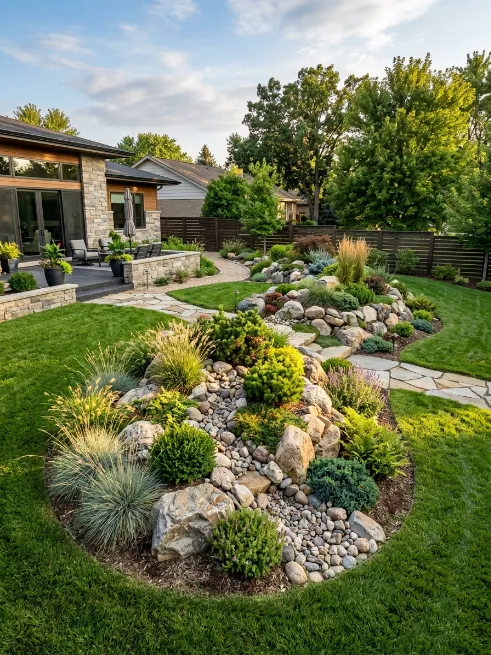
On a completely flat yard, a few gently sloped rock mounds add elevation and visual interest that flat lawns just can’t offer. Plant ornamental grasses or small shrubs on top and you’ve built a feature that looks intentional and designed, not accidental.
19. Pebble Mosaics As Ground Art
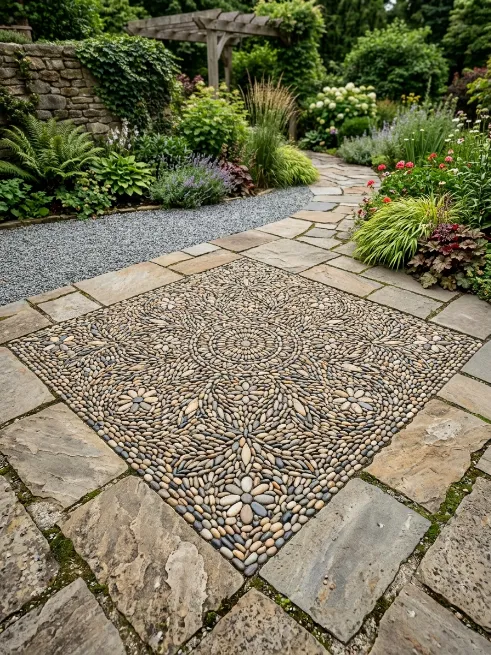
For the more ambitious homeowner, arranging small pebbles into patterns or even simple images set into a patio floor is a stunning custom touch. It takes patience but the result is something you genuinely won’t find in any other yard on the street.
20. A Full Xeriscape Yard
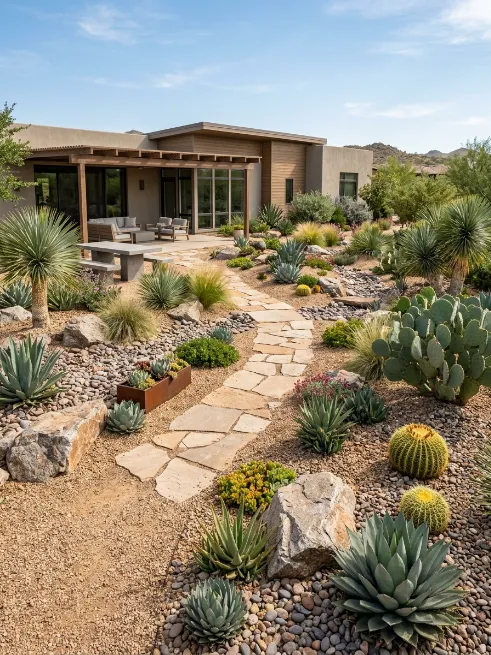
Xeriscaping means designing a yard that needs little to no extra water at all. Combine gravel, boulders, drought tolerant plants, and mulch across the whole property and you get a yard that stays green (or at least alive) through even the driest summers.
21. Rock Islands In A Lawn
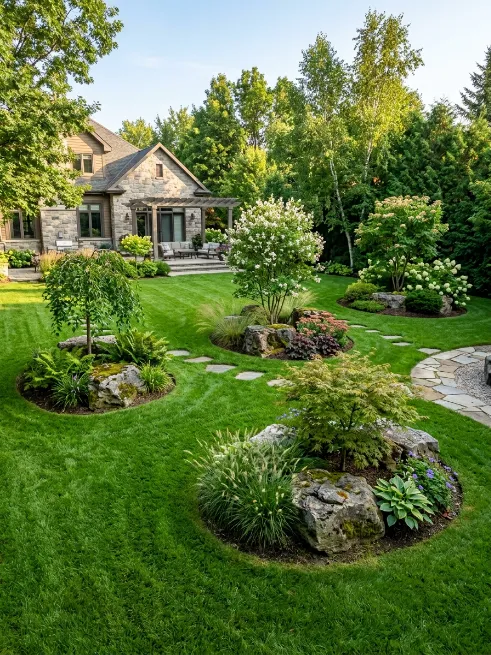
If you’re not ready to give up grass entirely, start with a few rock islands scattered across the lawn instead. Each one can hold a small tree, a cluster of plants, or just stand alone as a sculptural element. It’s a nice middle ground for people easing into the rock landscaping trend.
22. Gabion Walls For A Modern Look
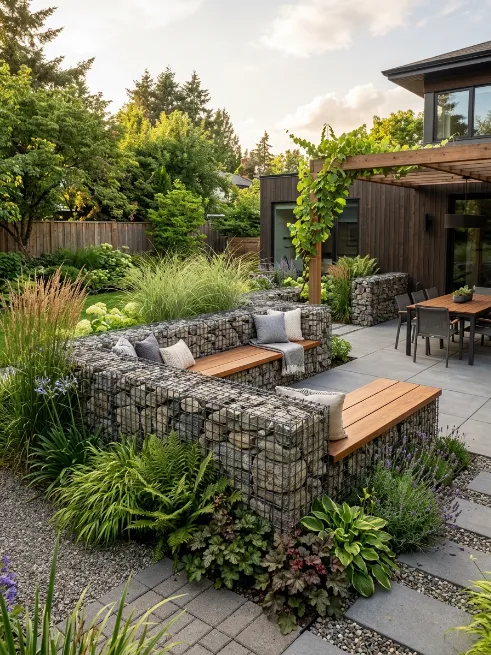
Gabion walls are wire cages packed with stone, and they’ve become hugely popular for modern backyard design. They work as retaining walls, privacy screens, or even outdoor seating when topped with a wood cap. The industrial look pairs surprisingly well with softer plantings around it.
23. Rock Accents Around A Water Feature
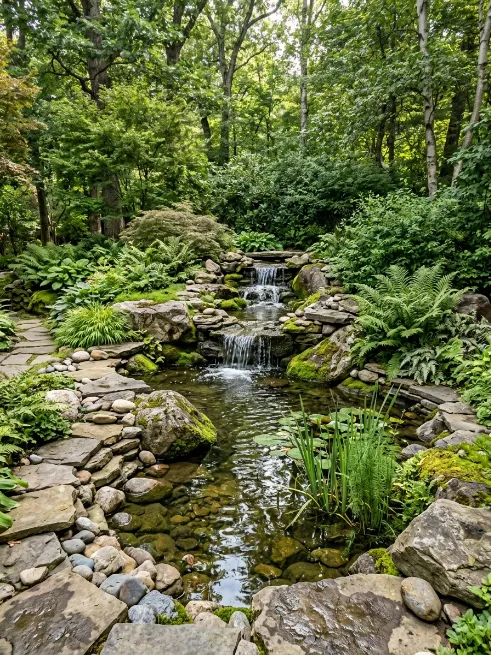
Ponds, fountains, and small waterfalls look far more natural surrounded by stone instead of mulch or bare dirt. Stack flat stones around the edges to hide liners and pumps, and toss a few smooth river rocks into the water itself for extra realism.
24. A Rock Garden Under Windows
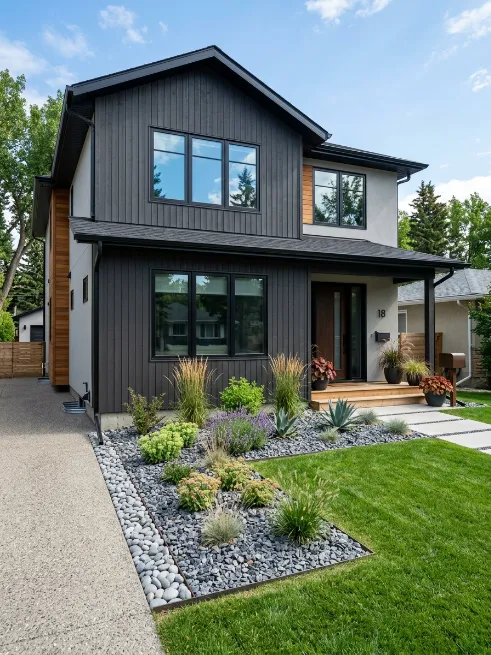
The area right under windows often gets ignored, but it’s prone to splash back and soil erosion during heavy rain. A simple bed of gravel or crushed rock under each window solves that problem and adds a clean architectural line to the front of your house.
Tips Before You Start Your Rock Landscaping Project
A few things make a real difference in how your finished project turns out. Always use landscape fabric underneath rocks and gravel, otherwise weeds will find their way through within a season. Pick rock sizes that match the scale of your yard, tiny pebbles get lost in a huge space, while giant boulders can overwhelm a small one.
Think about drainage before you place anything permanent, since water needs somewhere to go once it can’t soak into grass and soil the way it used to. And don’t feel like you need to redo your entire yard at once. Start with one bed, one path, or one corner, live with it for a season, then build from there.
Final Thoughts
Rock landscaping isn’t just a passing trend. It solves real problems like water waste, high maintenance, and boring flat yards, all while looking sharp in every season. Pick two or three ideas from this list that fit your space and your budget, and start small. Once you see how much easier your yard becomes to take care of, there’s a good chance you’ll be adding more rock features before next summer even arrives.